
SmartBOP™
Ai From the Wellbore to the Web
Shaping the Future of Well Monitoring
The Mandate
Blowout preventers (BOPs) are used for maintaining an oil well’s seal on the seafloor under extreme erratic pressure and uncontrolled flow/formation kicks during drilling.
They are essential for sealing, controlling, and monitoring wells to prevent blowouts.
After the Deepwater Horizon oil spill of April 2010, in which the failure of the rig’s blowout preventer (BOP) system led to the loss of 11 lives and caused the largest accidental offshore oil spill to date, the emergency response teams lost their ability to troubleshoot due to the lack of monitoring capabilities.
This incident has led to an increase in the efforts to minimize the chances of such accidents from occurring again.
In 2016, the US regulations mandated the requirement of well real-time monitoring for all blowout preventers operating in the Gulf of America.
Therefore, with the increase's emphasis on well safety, the offshore oil and gas industry has been working to develop new technologies and business relationships that can help operators and drilling contractor improve well control integrity.
Source: Mordor Intelligence
Vision Statement
Set the standard for an immutable, artificially intelligent technology that will aggregate live data from the wellbore to the web for meaningful use across the enterprise.
Mission Statement
COJENTO Corporation is committed to design and develop artificial intelligent technologies that will serve the oil industry proactively and productively.
The SmartBOP technology will:
Hydrocarbons
Components of TPH or Total Petroleum Hydrocarbons at first glance appear common and ordinary, however, they are the essential elements of life. One cannot address hydrocarbons in terms of stand-alone chemical elements but as aggregates referred to as compounds.
They define each other’s functions and compliment each other’s application. They are the sum total of what we refer to as the energy that powers up the developed and developing world.
The Proponent Elements of Hydrocarbons are:
- Carbon - 84% (Carbon Black, Carbon Disulfide)
- Hydrogen - 14% (Hydrogen Sulfide, Poly-Aromatic Hydrocarbons PAHs)
- Sulfur - 1 to 3% (hydrogen sulfide, sulfides, disulfides, and elemental sulfur)
- Nitrogen - less than 1% (basic compounds with amine groups)
- Oxygen - less than 1% (found in organic compounds such as Carbon Dioxide, Phenols Ketones, Carboxylic Acids)
- Metals - less than 1% (Nickel, Iron, Vanadium, Copper, Arsenic)
- Salts - less than 1% (Sodium Chloride, Magnesium Chloride, Calcium Chloride)
What’s Wrong With Hydrocarbons?
Not everything is wrong with hydrocarbons. Until it is densely concentrated in a single area of contamination. This is when hydrocarbons tip the pH balance scale. Where the potential of Hydrogen swings the homeostatic pendulum to favor either a healthy existence or a toxic environment. The pH level is one of the most important balancing factors of the human body and the ecosystem. It is the measure of acidity and alkalinity on a scale of zero (0) to fourteen (14), with zero being the most acidic, and fourteen being the most alkaline. Seven (7) is the demarcation point where the scale could go either way – acidic or alkaline.
An acidic pH is detrimental to most life forms. Although certain matters may thrive in a highly acidic setting, an alkaline pH is favorable to an existence full of vim and vigor. This shows an adequate amount of oxygen in the blood. Any slight decrease in pH will result in lower oxygen in the blood and cellular levels. Any reduction in pH, no matter how small, is the beginning of a disease state that affects quality of life. It is the essence of growing old gracefully for mankind, and survivability for marine life, wildlife and plant life. Under normal circumstances, fluids that influence life’s anatomic and physiological functions will fluctuate in the range of 7.35 and 7.45. This range is strictly maintained in support of blood/system pH that is slightly alkaline in the state of homeostasis. Homeostasis is the tendency of a physiologic system to maintain an internal acid/alkaline balance. It is the coordinated response of the physiological parts to substances, situations, or stimulus that threaten to disturb normal conditions and/or functions.
When hydrocarbons are introduced in overwhelming quantities, over an extended period of time, the pH balance scale tips from normal to an acidic and toxic state. This applies to the entire ecosystem, i.e. the environment, atmosphere, plant life, wildlife, marine life and human life. The level of toxicity may vary from case to case, depending upon the amount and length of exposure. In humans, organ specific damage depends upon the intake route, i.e. inhaled, ingested, or absorbed. Organs that are directly affected by exposure to carcinogenic Total Petroleum Hydrocarbons are the brain, heart, lungs, kidneys, eyes, and skin. Individual health, genetic make-up, previous extended exposure to other chemicals, personal habits such as smoking, drinking, substance abuse, and other pollutants can hasten the influence of toxicity.
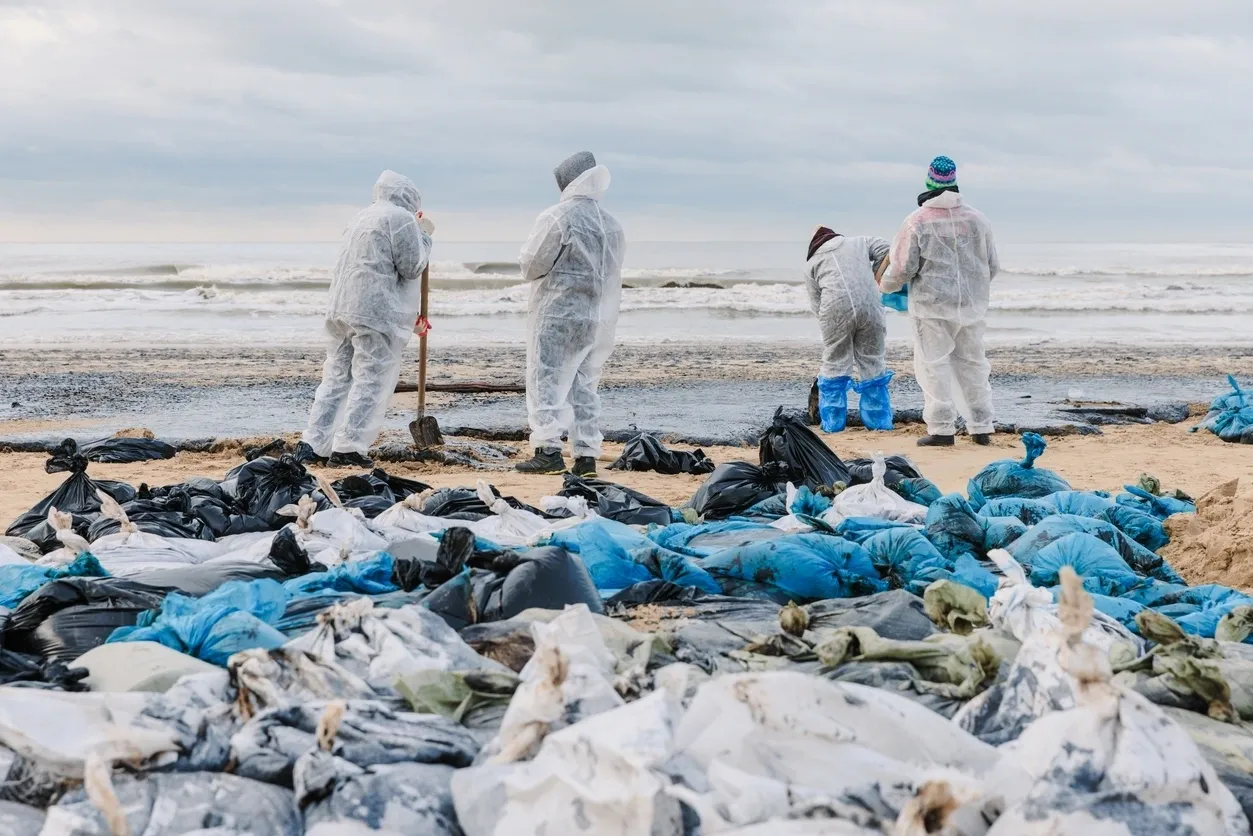
The Deep Horizon Oil Spill produced mutated and underdeveloped marine animals. Oil spills can cause environmental havoc that takes months and years to clean up and rehabilitate.
Airborne fossil fuel emissions are trapped in the atmosphere and create a green house effect. Acid rain is caused by a chemical reaction that begins when compounds like sulfur dioxide and nitrogen oxides are released into the air. These substances mix and react with water, oxygen, and other chemicals to form more acidic pollutants; in turn these precipitates back to land and surface waterways in the form of rain, sleet, snow, fog and dust clouds which could potentially seep into the aquifer (ground water supply).
Fusion of these compounds under certain conditions heightens volatility making them highly combustible on land, sea, or air.
Hydrocarbons can either fuel, empower or undermine the existence of life. Raising the safety standards in hydrocarbon production, delivery and utilization requires new technologies that elevate safety protocols.
In response to the need for strategic technologies to support environmental protection and safety, the SmartBOP™ lays out a solid foundation and establishes a standard platform to achieve these goals. Oil wells connected to the cloud monitored, supervised, supported, and controlled.


AI-Powered Oil Spill Prevention
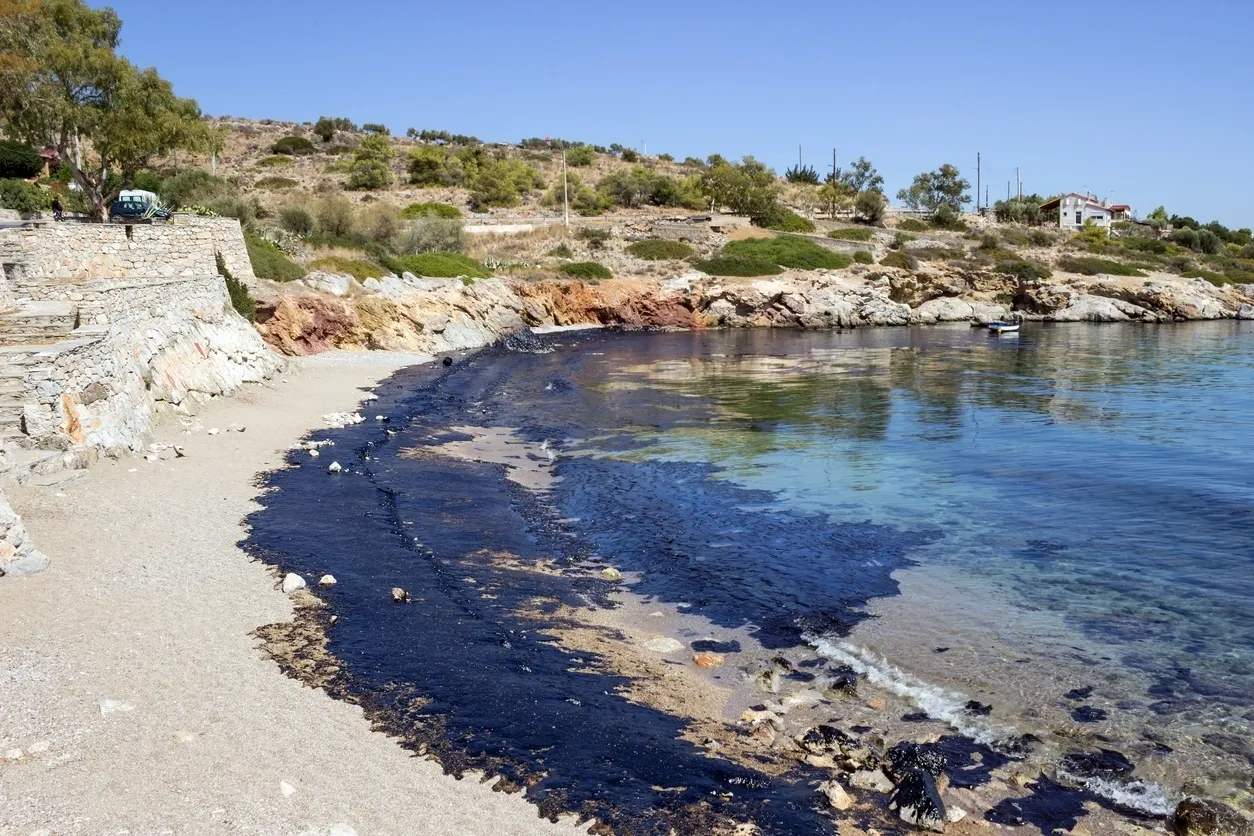
Oil spills are events that occur when oil escapes and accidentally pours out in unprecedented volumes offshore, onshore, and in the arctic. Human error, force majeure, accidents, sabotage, lightering operations (the transfer of cargo from one oil tanker to another), poorly maintained pipelines, a tanker's state of disrepair, or acts of war are all potential factors in a spill.
For instance, a supertanker can accidentally encounter an iceberg, run aground in shallow waters, get caught in a storm in the high seas, hit a barrier reef, and explode. It can sustain a puncture; a massive hole in its hull can cause its cargo to pour out into the extended vicinity. A tanker may capsize or break apart in the wake of a storm and empty its cargo into the ocean. It can run into a minefield or get caught in the line of fire, sinking with its cargo into the ocean deep. Oil tanker collisions are commonly factors in massive oil spills.
In the case of the Deep Water Horizon catastrophe in Louisiana, a severed pipe caused unprecedented volumes of oil to spill from the well into the Gulf Seas for months. Oil is buoyant. It is lighter than water and can float meters thick above sea level. It can ride the rising tide to the shore, waterways, and inlets or flow to destinations dictated by wind drifts and hydrodynamic forces.
Escaped gas or hydrocarbons may also be derived from fissures in the ocean floor.
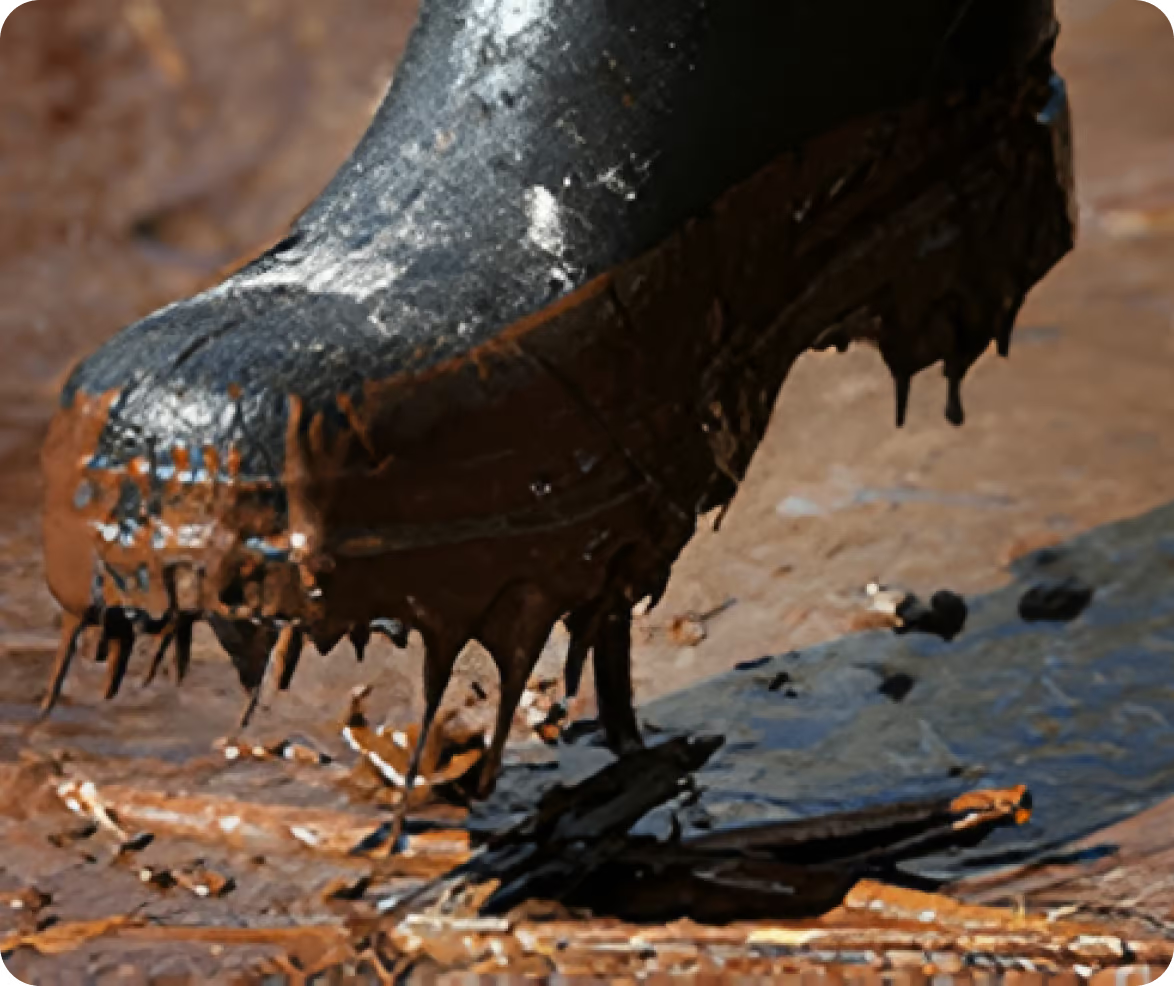
Oil spills also occur onshore in the desert, mountains, forests, and arctic regions where oil drilling or refining operations are an ongoing activity. Massive terrestrial oil spills may emanate from an undetected, broken, punctured, dislocated, or disconnected pipe, causing oil to seep and soak the soil, resulting in tar sands. At times, oil spilled drains deep into the aquifer, causing contaminated water. It can find its way into fields, farmlands, and waterways, causing changes in the ecosystem.
The timeline for the restoration of the pH balance to support vegetation and life forms along shorelines, riverbanks, brooks, seas, oceans, forests, deserts, seabed, farmland and the tundra is 20 to 30 years.
HISTORY OF OIL SPILLS
1967-03-18
1967 — England, 38 Million Gallons Spilled
Supertanker Torrey Canyon struck Pollard's Rock on the Seven Stones reef between the Cornish mainland and the Scilly Isles. It ran aground, spilling its cargo, which affected hundreds of miles of coastline in the UK, France, Guernsey, and Spain. Mitigation efforts by the Cornwall fire brigade and attending Royal Navy included the use of detergents to disperse the oil. When the ship started to break up, it was decided to set the oil on fire to prevent the disaster from worsening.
1972-12-19
1972 — Oman, 35.3 Million Gallons Spilled
The South Korean supertanker, Sea Star, collided with Brazilian tanker the Horta Barbosa off the coast of Oman. The vessel caught fire, and the crew abandoned ship. Although the Horta Barbosa fire was extinguished in a day, the Sea Star sank into the Gulf on December 24 following several explosions.
1976-12-15
1976 — USA, 7.7 Million Gallons Spilled
M/V Argo Merchant had a history of running aground. That day, it ran ashore on Middle RUP Shoal, about 29 nautical miles southwest of Nantucket Island in Buzzards Bay, Massachusetts. Six days later, M/V Argo Merchant broke apart, emptying its cargo into the sea. High winds blew the slick away from shore, sparing coastal fisheries and beaches.
1977-04-24
1977 — Norway, 81 Million Gallons Spilled
An incorrectly installed downhole safety valve in the Ekofisk Bravo platform, resulted in the largest oil spill blowout in the North Sea to date.
1978-03-16
1978 — France, 69 Million Gallons Spilled
The massive Amoco Cadiz was caught in a winter storm in Portstall damaging the ship's rudder. Several ships responded to their distress call, but none were able to prevent the ship from running aground. The following day, the supertanker broke in half, sending its contents into the English Channel. The French later sank the ship.
1979-06-03
1979 - Mexico, 140 Million Gallons Spilled
This spill did not involve a tanker, but rather the offshore oil well, Pemex. A state owned Mexican petroleum company was drilling a well in the Bay of Campeche off Ciudad del Carmen when a blowout occurred. The oil ignited, causing the drilling platform to collapse. Oil began gushing into the Gulf of Mexico at a rate of 10,000 to 30,000 barrels a day for almost an entire year before workers were able to cap it.
1979-07-19
1979 - Trinidad & Tobago, 90 Million Gallons Spilled
The Greek Oil tanker the Atlantic Empress was caught in a tropical storm off the coast of Trinidad and Tobago when it collided with the Aegean Captain. The damaged ship started losing oil and continued to leak while being towed. On August 3, the tanker finally sank in deep water, where the remaining cargo solidified.
1980-03-30
1980 - Norway, 123 Oil Workers Killed
Alexander L. Kielland was a Norwegian semi-submersible drilling rig turned flotel, housing 300 workers. It capsized, killing 123 people. Investigative reports concluded that the facility overturned due to mechanical fatigue. Fatigue cracks on the D-6 bracing that connected the collapsed D-leg to the rest of the rig were a major factor in this accident. Cold cracks in the welds, increased stress concentrations due to a weakened flange plate, a poor weld profile, and cyclical stresses (which would be common in the North Sea) collectively played a role in the rig's collapse. The design was flawed owing to the absence of structural redundancies.
1983-02-10
1983 - Iran, 80 Million Gallons Spilled
The Nowruz Oil Field spill occurred when a tanker collided with an oil platform. The weakened platform was closed, and collapsed upon impact, spewing oil into the Persian Gulf. The ongoing Iran, Iraq war prevented the leak from being capped immediately.
1983-08-06
1983 - South Africa, 170,000 Tons Spilled
The Castillo de Bellver in Saldanha Bay caught fire 70 miles north-west of Cape Town, and drifted in the open sea until it broke in two 25 miles off the coast. The ship’s stern sank, and its cargo entered the sea. The bow section was towed and deliberately sunk.
1983-08-06
1983 - Russia, 84 Million Gallons Spilled
A poorly maintained pipe in the Kolva River leaked for eight months before being contained by a dike. However, sudden cold temperatures caused the dike to collapse and millions of gallons of accumulated oil were released across 170 acres of streams, fragile bogs and marshland.
1988-07-06
1988 — Scotland, 166 Workers Killed
166 workers on Occidental Petroleum's Alpha Piper Rig in the North Sea were killed. The platform was originally designed as an oil platform and later converted to gas production. For safety reasons, the modules had been organized with the most dangerous operations located away from personnel areas. The conversion from oil to gas broke this safety concept and located sensitive areas such as the gas compression facility next to the control room. This apparently played a key role in the accident. The world's worst offshore oil disaster in terms of human lives had 61 survivors.
1988-11-10
1988: In Canada, 40.7 Million Gallons Spilled
Loaded with North Sea Brent Crude Oil, the tanker was making its way to the Come By Chance refinery at Come-by-Chance, Newfoundland, and Labrador. About 1,000 nautical miles off the coast of Newfoundland, a major North Atlantic storm arose, buffeting the ship with 25-foot waves and 44-mile-per-hour winds. The ship sent out a distress signal and kept heading for shore, but an explosion on board caused the ship to break in two 700 nautical miles off the coast of Nova Scotia. As the ship began to sink, a fire broke out on its stern, causing the oil to catch fire. Hazardous weather conditions prevented the Canadian Coast Guard from immediately reaching the spill. Much of the oil had burned up before the coast guard arrived.
1989-03-24
1989 - USA, 100 Million Gallons Spilled
Heading towards Long Beach California, the Exxon Valdez struck the Bligh Reef in Prince William Sound, Alaska. The remote location of the accident, accessible only by helicopter, plane, and boat, made government and industry response efforts difficult and taxing to existing response and recovery plans. It is considered to be one of the most devastating human-caused environmental disasters.
1989-12-19
1989 — Canary Islands, 19 Million Gallons Spilled
An explosion in an Iranian supertanker, the Kharg-5, caused a spill into the Atlantic Ocean about 400 miles north of Las Palmas, forming a 100-square-mile oil slick.
1990-06-08
1990 — USA, 5.1 Million Gallons Spilled
The Mega Borg oil spill happened as a result of a lightering (unloading or transferring cargo from one ship to another) accident and subsequent explosion in the pump room of the vessel. Estimates suggest the tanker lost as much as 3 million gallons of oil. The U.S. Coast Guard said that only roughly 12,000 gallons remained on the water after much of the oil had burned or evaporated (75,000 gallons of oil were recovered). There were concerns that the spill could form tar balls on Galveston's beaches, but only a few minor incidents were noted.
1991-01-19
1991 — Kuwait, 380–520 Million Gallons Spilled
The worst oil spill in history was an act of war. During the Gulf War, Iraqi forces attempted to prevent American soldiers from landing by opening valves at an offshore oil terminal and dumping oil from tankers. A 4-inch thick oil slick was created that spread across 4,000 square miles of the Persian Gulf.
January 23–27: 240–460 million gallons of crude oil were released into the Persian Gulf from tankers 10 miles off of Southern Kuwait. The spill had little military significance. On January 27, U.S. warplanes bombed pipe systems to stop the flow of oil.
1991-04-11
1991 - Italy, 45 Million Gallons Spilled
M/T Haven Tanker exploded and sank off the coast of Genoa, killing six people and leaking its remaining oil into the Mediterranean for 12 years. Supposedly the Haven had been scrapped after being hit by a missile during the Iran-Iraq War, but was subsequently put back in operation. The cause of the explosion was thought to be the ship's poor state of repair.
1991-05-28
1991 - Angola, 51 - 81 Million Gallons Spilled
While en route to Rotterdam from the Gulf Terminal at Kharg Island, Iran, an explosion ripped apart an oil tanker dumping massive amounts of Iranian heavy crude 900 miles off the coast. The tanker burned for three days and subsequently sank on the the 1st of June of the same year. Efforts to locate the wreckage were unsuccessful.
1992-03-02
1992 - Uzbekistan, 88 Million Gallons Spilled
This massive terrestrial oil spill started at the Mingbulak oil field in the Fergana Valley. A blowout occurring at well #5 caught fire and burned for two months. Two million barrels were collected behind emergency dykes. The oil stopped flowing by itself.
1993-08-10
1993 - USA, 338,000 Gallons Spilled
The spillage was caused when three ships collided, the barges Bouchard B155 and Ocean 255, and the freighter Balsa 37. The Bouchard spilled an estimated 338,000 gallons of No. 6 fuel oil into Florida's Tampa Bay.
1994-10-01
1994 - Russia, 2 MIllion Barrels Spilled
A pipeline oil spill occurred in Usnisk in Northern Russia just South of the Arctic Circle. The leak started in February 1994 but was contained within a dyke built for the purpose. Following a heavy rainfall the dyke burst, spilling oil into the Kolva River, a US tributary. The U.S. Energy Department estimated the spill at 2 million barrels. The state-owned Russian oil company claimed the spill was only 102,000 barrels. On the 4th of November of the same year another oil spill was reported to be burning.
1996-02-15
1996 - Wales, UK, 72 Tons of Oil Spilled
Supertanker Sea Empress ran aground at the entrance of Milford Haven Waterway in Pembrokeshire when she struck mid-channel rocks at St. Ann's Head. The spill occurred within the Pembrokeshire Coast National Park - one of Europe's most important and sensitive wildlife and marine conservation areas, and created a 25-mile slick.
1999-12-12
1999 - Border French/Spanish Atlantic Coast, 3 Million Gallons Spilled
Maltese-registered tanker Erika ran into a storm as she entered the Bay of Biscay. She broke in two, sinking and releasing 3 million gallons of oil into the sea.
2000-01-18
2000 - Brazil, 343,200 Gallons Spilled
A ruptured pipeline at the Duque de Caxias oil refinery, owned by the government oil company, Petrobas, spewed heavy oil in Guanabara Bay off Rio de Janeiro. The leak was contained.
2000-11-28
2000 - USA, 567,000 Gallons Spilled
The oil tanker Westchester lost power and ran aground near Port Sulphur, Louisiana, dumping crude oil into lower Mississippi. The spill was the largest in U.S. waters since the Exxon Valdez disaster in March 1989.
2002-11-13
2002 - Spain, 77,000 Metric Tons Spilled
Prestige was a Greek-operated, single-hulled oil tanker registered in the Bahamas. During a storm off the cost of Galicia, one of its tanks burst and the integrity of the single-hulled tanker quickly deteriorated. It was reported that a 40-foot section of the starboard hull had broken off, releasing a substantial amount of oil. After sinking, the tanker continued to leak 125 tons of oil a day.
2003-07-28
2003 - Pakistan, 28,000 Tons Spilled
The Tasman Spirit ran aground near the Karachi port, eventually cracking in two. One of its four oil tanks burst open, leaking crude into the sea.
2004-12-07
2004 - USA, 337,000 Gallons Spilled
A major storm pushed the M/V Selendang Ayu onto a rocky shore, breaking it in two. Most of the oil was driven onto the shoreline of Makushin and Skan Bays.
1976-12-15
2005 — USA, 7 Million Gallons Spilled
August – September: Damage in New Orleans, Louisiana, caused by Hurricane Katrina, caused oil leaks from various sources, including pipelines, oil storage tanks, and industrial plants.
2006-07-19
2006 — USA, 71,000 Barrels Spilled
A violent storm caused a waste oil tank at the CITGO refinery at Calcasieu River to break and deposit its contents on the riverbank.
2006-07-15
2006 — Lebanon, 3–10–10 Million Gallons Spilled
The Israeli navy bombing of the Jieh coast power station in Beirut caused leaks that affected nearly 100 miles of coastline. A wartime coastal blockade hampered outside clean-up efforts.
2006-08-11
2006 — Philippines, 530,000 Gallons Spilled
M/T Solar 1 sank off the coast, putting the country's fishing and tourism industries at great risk. The ship sank in deep water, making it virtually unrecoverable, and continued to emit oil into the ocean as other nations were called in to assist in the clean-up effort.
2007-12-07
2007 — Korea, 2.8 Million Gallons Spilled
The Hebei Spirit collided with a steel wire connecting a tugboat and barge five miles off South Korea's west coast. Seven thousand people tried to clean up 12 miles of oil-coated coastline.
2008-07-25
2008 — USA, 419,000 Gallons Spilled
A 61-foot American Commercial Lines barge collided with the 600-foot oil tanker Tintomara in the Mississippi River near New Orleans. The tanker sustained no damage, but the crash split the barge nearly in two, dumping oil into the river just off the banks of downtown New Orleans. The Coast Guard closed off a 100-mile stretch of river from the port of New Orleans to the Gulf of Mexico, while cleanup efforts commenced to limit the environmental impact on local wildlife.
2009-03-11
2009 - Australia, 52,000 Gallons Spilled
During Cyclone Hamish, unsecured cargo aboard the container ship MV Pacific Adventurer came loose on deck, causing the release of heavy fuel and 620 tons of ammonium nitrate, a fertilizer, into the Coral Sea. About 60 km of the Sunshine Coast was covered in oil, prompting the closure of half the area's beaches.
2010-01-23
2010 - USA, 462,000 Gallons Spilled
The oil tanker Eagle Otome and a barge collided in the Sabine-Niches Waterway. Environmental damage was minimal as about 46,000 gallons were recovered and 175,000 gallons were dispersed or evaporated, according to the U.S. Coast Guard.
2010-04-22
2010 - USA, 206 Million Gallons Spilled, 11 Oil Workers Killed
British Petroleums's semi-submersible drilling rig the Deep Water Horizon sank in the Gulf of Mexico following an April 20th explosion in the vessel. When the rig sank, the riser (a 5,000-foot-long pipe connecting the wellhead to the rig) detached and started leaking oil. U.S. Coast Guard investigators additionally discovered a leak in the wellhead itself.
For 87 days, as many as 60,000 barrels of oil per day gushed into the Gulf. Oil reached the Louisiana shore on April 30, affecting 125 miles of coast. By early June, oil had reached Florida, Alabama, and Mississippi. It is the largest oil spill in U.S. history. Oil gushed from the broken well for more than 85 days, covering 572 miles of Gulf shoreline, killing countless birds and marine life. BP made several unsuccessful attempts to plug the well, but oil flowed possibly at a rate as high as 2.5 million gallons a day until the well was capped on July 15. The long term effects of the oil, and the 1.82 million gallons of dispersant used on this fragile ecosystem remain unknown, but experts say they could devastate the Gulf for years to come.
Mapping Our Global Reach
Natural Gas Production By Country Map
Volume of natural gas produced in one year in cubic meters
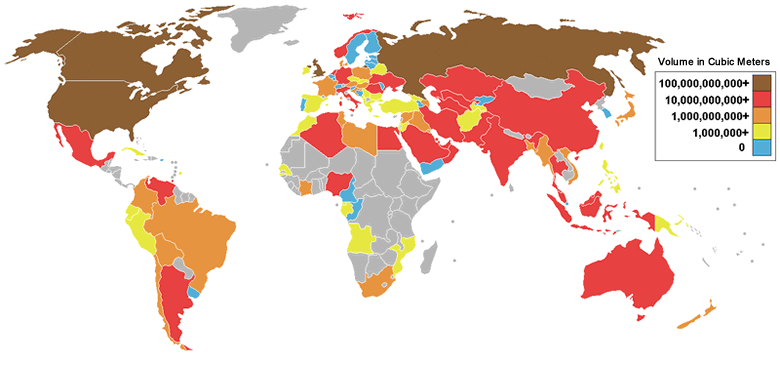
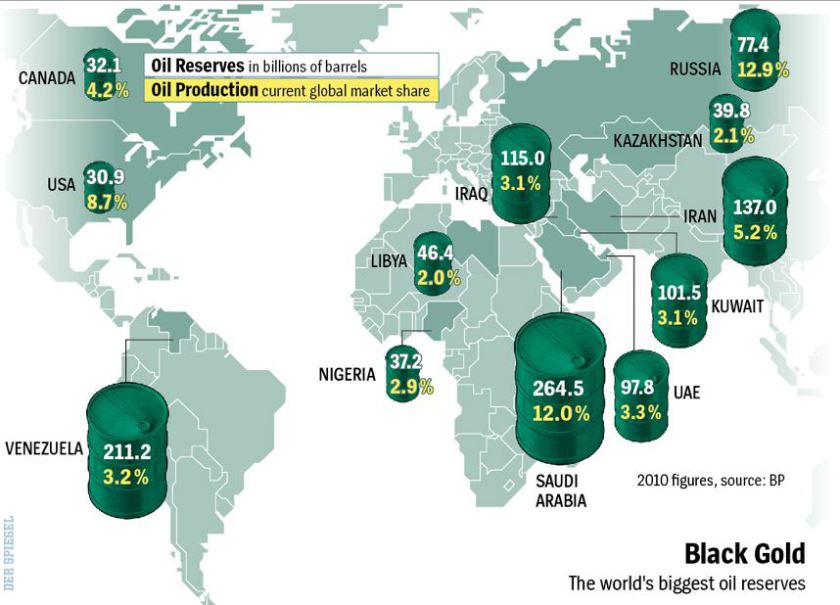
MAP: The World's Biggest Oil Reserves
Aftermath
The BP oil spill has a price tag of $60 billion in liabilities and $20 billion in cleanup costs to be paid from US taxpayer dollars. However, the aftermath of an oil spill goes beyond financial settlements. The devastation of various ecosystems and the damage to the environment go beyond the scope and scale of what deep corporate pockets can afford to defray. A ruptured pipe, a sunken ship, an oil field fire, or an explosion all share a common denominator spelling environmental catastrophe.
An oil slick that covers miles and miles of surf and sea, asphyxiates marine life due to diminished oxygen supply. They flee like humans, running away from fire with no place to go.
The potential destruction of planktons, seaweeds, and lengths of coral and barrier reefs becomes a reality as insoluble elements of fossil fuel and dispersants settle to the ocean floor. Dispersed oil sticks on to anything and everything and is then mistaken by marine animals as food.
Genetic expression is a tangible factor in life forms. When substances of toxic composition are introduced to the animal and plant kingdom, genetic mutation follows. Abnormalities in the gene pool produce mutations and even death to these life forms. Research into both the BP and Exxon Valdez spills shows that dolphins and other marine life continued to die in record numbers, with infant dolphins dying at six times the normal rate. A study released in 2014 reported that tuna and amberjack exposed to oil developed deformities of the heart and other organs expected to be life-threatening, if not fatal. Another study found that cardiotoxicity might have been widespread in animal life exposed to the spill. Research specific to the Exxon Valdez spill reports the deaths of 100,000 to as many as 250,000 seabirds, at least 2,800 sea otters, approximately 12 river otters, 300 harbor seals, 247 bald eagles, 22 orcas, and an unknown number of salmon and herring. A University of North Carolina study found that the remaining oil was lasting far longer than anticipated, which in turn had resulted in more long-term loss of many species than had been expected. The researchers found that at only a few parts per billion, polycyclic aromatic hydrocarbons caused a long-term increase in mortality rates. They reported that “species as diverse as sea otters, harlequin ducks, and killer whales suffered large, long-term losses and that oiled mussel beds and other tidal shoreline habitats will take an estimated 30 years to recover.”
A study done in 2006 by the National Marine Fisheries Service in Juneau, found that approximately 6 miles of shoreline around Prince William Sound was still affected by the spill, with 101.6 tons of oil remaining in the area. Exxon Mobil denied any concerns, stating that they anticipated the remaining oil would not cause any long-term ecological impacts. According to Exxon Mobil: "We've done 350 peer-reviewed studies of Prince William Sound, and those studies conclude that Prince William Sound has recovered, it's healthy, and it's thriving." In contrast, a 2007 report by the National Oceanic and Atmospheric Administration concluded that this residual contamination can produce chronic low-level exposure, discourage subsistence where the contamination is heavy, and decrease the “wilderness character” of the area.
Obviously, this toxic reality impacts wild, marine, avian, and human life, as well as the vegetation that expressly biomagnifies into the human food chain.
Please take the time to view this short film documenting the impact of hydrocarbons in the food chain as it impacted lives in a Canadian community.
We cannot and will not find the cures for cancer, rare or common, when carcinogens proliferate our environment.
The cost of long-term devastation of flora and fauna along shorelines, riverbanks, brooks, forests, desert arctic regions, marine life, avian life, wildlife, and human life cannot be quantified. Studies are numerous to support the negative impact of an oil spill on the environment.
The bottom line is that oil spills can be prevented with intelligent technology and shared real-time human oversight. Rapid response and standby support are crucial to the containment of an oil spill.
There is still time to avert the largest mass extinction of various species in our lifetime. We can start with the SmartBOPTM and evolve technologically to create a more efficient system for dealing with oil spills. The oil and gas industry and taxpayers will save billions in liability and cleanup costs and spare the ecosystem the environmental insult it incurs.
Our environment. Our survival.
Patent Numbers: 9.109.430 | 9.850.729
AI, SAAS, Block Chain, Clean Technology. Pre-emptive buffering of the environment from hydrocarbon contamination.
AI from the wellbore to the web.
Click to watch QuickTime movie
Newton’s Law #1: “Inertia is the principle that an object will tend to keep moving at a constant speed and in one constant direction unless something else acts to change it. That external force could be almost anything.”
True to this time-honored principle of physics, the SmartBOPTM draws upon its artificial intelligence capabilities and robotics to oppose and direct surging millions of gallons of hydrocarbons, propelled by volumes of pressure, into manageable and recoverable proportions. Patented in structure and method, it is the only blowout preventer patented in a hundred years.
The Game Changer
Traditional BOPs feature four ram blocks, which are: blind ram, variable bore, shear, and the blind shear. Its function is to either block the surge of fossil fuel when the volumes of pressure are high, or shear the pipe to alleviate pressure and save the infrastructure.
But first, let us acknowledge the four major problems in oil drilling, which are velocity, control, erosion, and freezing.
In Contrast
Leveraging on the premise that volumes of pressure are best managed rather than controlled, in contrast, the chamber-based SmartbopTM controls velocity and erosion as well as kill by redirecting the surge propelled by volumes of pressure to its chambers. This process blunts the force of velocity and minimizes the erosional process forged by sediments and the extreme heat of the hydrocarbons in a closed and constricted space (7-inch pipe). The chambers are vent and pump enabled, thereby facilitating a free flow of hydrocarbons through vents and into containers and preventing freezing. These control mechanisms prevent erosion-instigated oil spills catalytic to explosions. Securing the integrity and usability of the well bore.
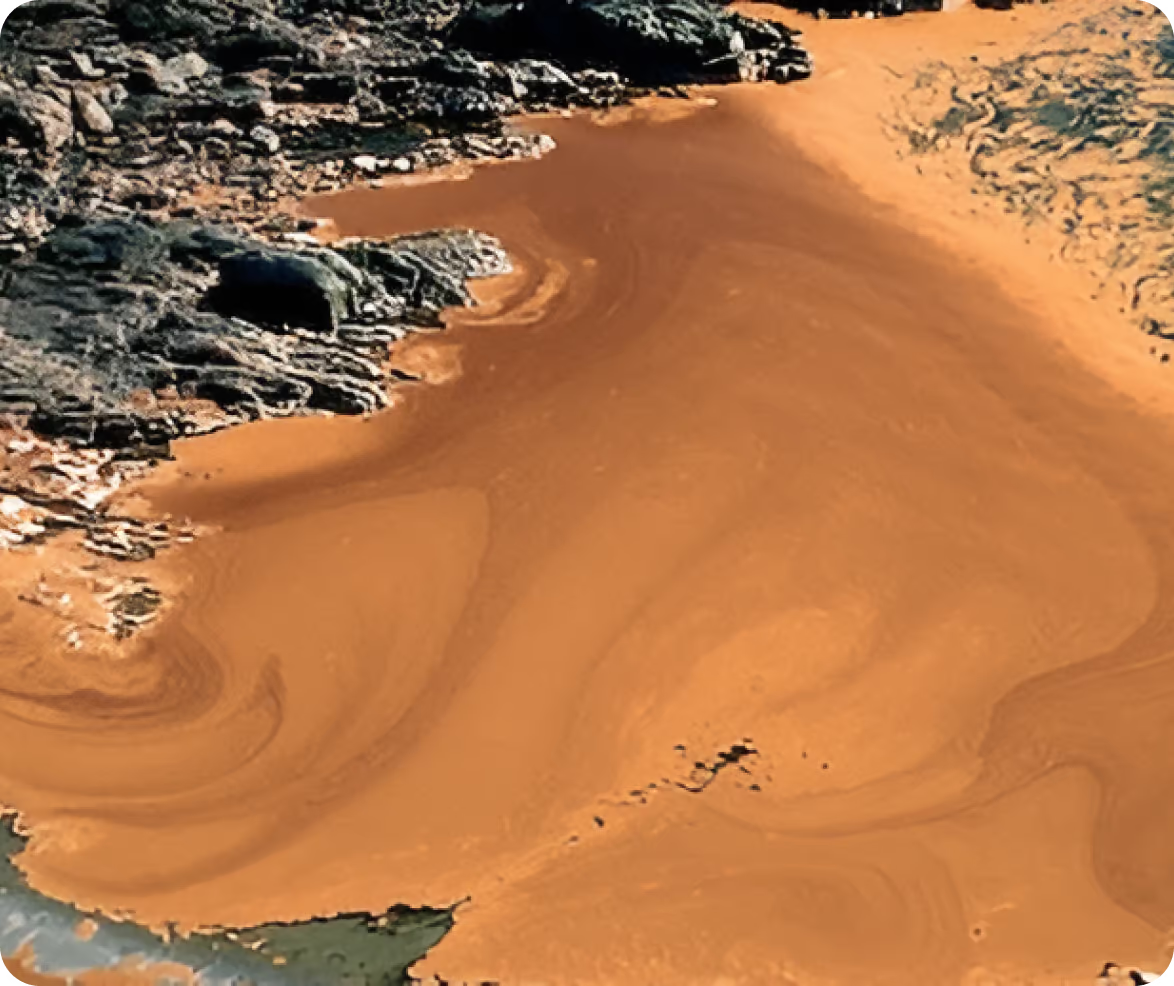
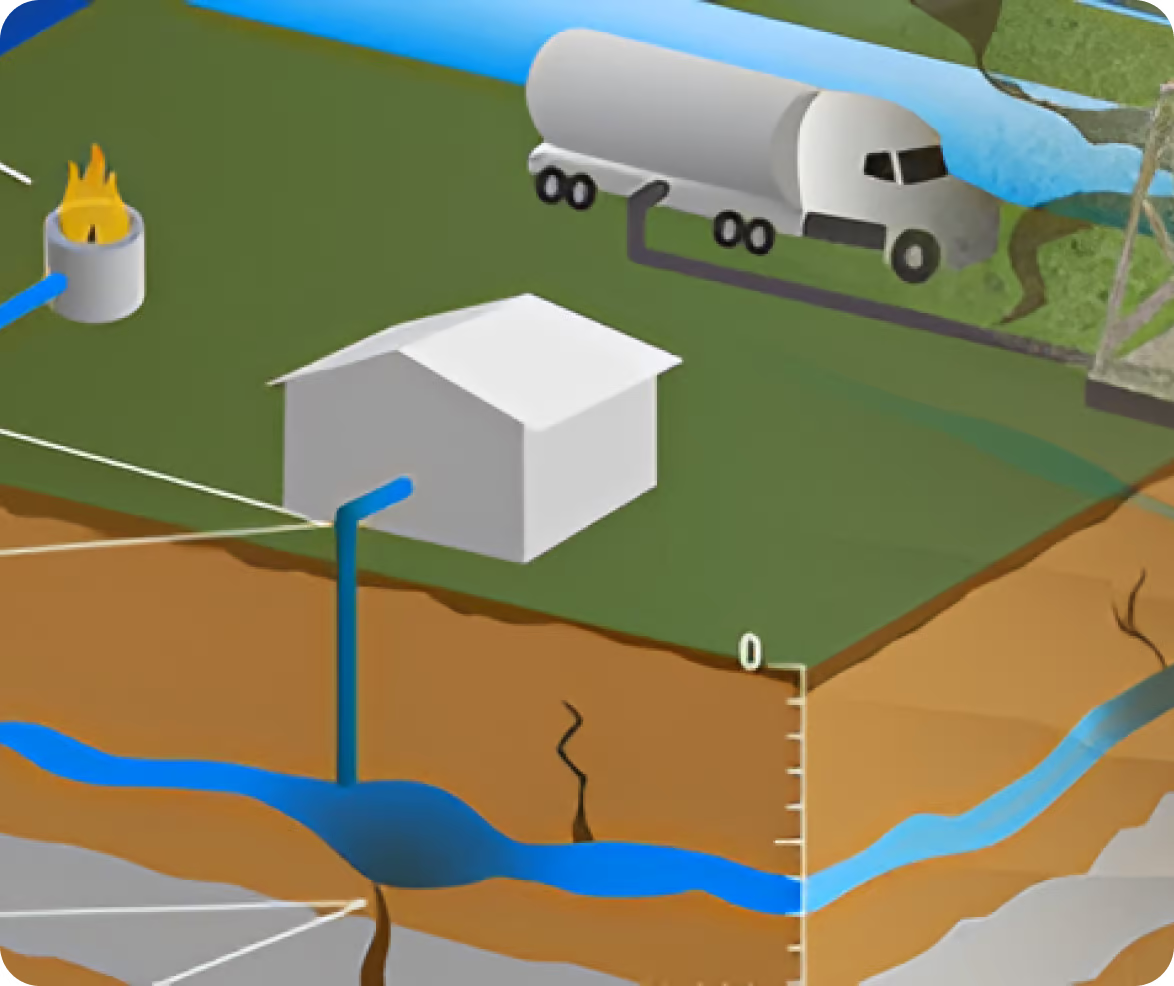
Subsea Oil Wells and the Oil Slick from the BP Oil Spill
What the Experts Are Saying
Although blowout preventers are just one of the important barriers for avoiding a major offshore accident, the specific findings from the investigation about this BOP’s unreliability illustrate how the current system of regulations and standards can be improved to make offshore operations safer, MacKenzie said. Ultimately, the barriers against a blowout or other offshore disaster include not only equipment like the BOP, but also operational and organizational factors. And all of these need to be rigorously defined, actively monitored, and verified through an effective management system if safety is to be assured. Source: WorkBoat.com
Although there have been regulatory improvements since the accident, the effective management of safety critical elements has yet to be established, investigator Mckenzie said. This results in potential safety gaps in U.S. offshore operations and leaves open the possibility of another similar catastrophic accident. Source:WorkBoat.com
But there is currently no alternative to the use of blowout preventers on many wells. As the second of two barriers to containing formation pressures, the B.O.P. is integral to doing our job, said John Rogers Smith, an associate professor of petroleum engineering at Louisiana State University.
Source NYTimes
Ultimately The SmartBOPTM Proposes to be the Standard Solution to Existing Problems
The SmartBOP UniverseTM offers a comprehensive system that is passive, progressive, and interactive. It is a stable anchor to an oil drilling and production operations. While offering the ability to surveil and present predictable actionable situational analysis. It allows for a dyamic data anaytics based response and support online and onsite. It is designed to:
"Panoramic Analogous Appraisal Decisions Standard (PAADS)" A Command and Control Center
The SmartBOPTM corresponds to a command and control center called "Panoramic Analogous Appraisal Decisions Standard (PAADS)". In an environment where seconds and nanoseconds delineate revenues from catastrophic costs in billions of dollars, PAADS, concurrently allows corporate decision makers, petroleum field engineers and BOP (Blowout Preventer) Control Engineers, real time perspective on events, data, analysis, and prescient warnings. Accurate readings on volumes of pressure buildup, anomalies within the wellbore, and emissions, are worthy of attention that necessitate an immediate and timely response. Operators are presented actionable instantaneous data reference to manage the situation, avert a catastrophe, or kill the well.
PAADS receives this information from the gauges, sensors and flow control mechanisms in the internal server facilities that are inherent to the hydrodynamic and thermodynamic SmartBOP; making it the robust and intelligent technological choice suitable for deep subsea and onshore installations.
BOP QUADS
SmartBOPTMs brain and data center is divided into QUADS (Queued Universal Accelerated Data/Delivery System). It is software driven and runs on a Secure Dedicated Cloud Array (SDCA). Appropriate redundancies are provided at each Quad.
It can be integrated into existing BOP stacks. Online support is available 24/7.
Q1 & Q3 monitors hydraulic and pneumatic Shutter Ram Activities.
Q2 & Q4 monitors sensor readings, through flows, mud lines, emissions and vent/pump activities.
Subsea Monitoring & Safety Automation
WBV/S - Wellbore Video & Sensors monitors seismic vibration activities and surveillance via picture on picture computer monitors.
Alert Monitors provide a heads up for repairs, and data analytics on drilling site anomalies.
The cognilytics feature sends a well kill alarm and initiates shut mode in preparation for vent deployment should volumes of pressure continue to rise above manageable levels.
Existing christmas trees have a current technical limit of up to around 3,000 meters subsea, with working temperatures of -50 degrees Fahrenheit to 350 degrees Fahrenheit with a pressure of up to 15,000 psi. The deepest subsea tree installed was in the Gulf of Mexico at approximately 2,700 meters.
Disclaimer:
The documents provided on this website contain statements related to our future business and financial performance and future events or developments involving COJENTO that may constitute forward-looking statements. We may also make forward-looking statements in other reports, in presentations, in material delivered to shareholders and in press releases.
Executives, Consultants, & Engineers
Capability Statement
Our nuanced team offers 35 collective years of pioneering design, development, and manufacturing of visionary solutions for the oil and gas industry worldwide. Their hands-on oilfield experience spans the industry's various terrains. They deliver actionable knowledge and expertise relevant to robust business development, increased operational safety, enhanced productivity, an increase in revenues, and diminished liabilities.
Advanced Well Monitoring

Charlie Chapman
Principal R&D Engineer
Certified in Solidworks 2005-2014, Creo 2, AutoCad, Pro-E, Inventor, Windchill Data Management, Cosmos/Simulation, EPDM Data Management, JD Edwards ERP, Smartteam Data Management, Syteline ERP, Mathcad, Microsoft Project/Office Suite, Solidworks certified professional (instructor), Cosmos certified professional (instructor), Motion certified professional (instructor).
Robert S. Rodriguez
Senior R & D Engineer
Experienced in prototype development. Proficient executing 3D and 2D renderings that include dimensions, tolerances, surface finishes, formats, parts assemblies, testing and machining prints using SolidWorks for manufacturing of oil drilling tools.
Stewart Will
BOP Control Manager
Deeply knowledgeable in acoustic signaling for subsea long-range wireless communications, particularly the Kongsberg and Sonardyne brand systems. Adept in the intricacies of FSOs (free space optics) suited for surface low-distance communications. Experienced in the design of Ocean Battery Packs specific to extended battery life cycles.
Adam Khatib
Petrodynamics Analyst
Provided conceptual and preliminary design calculations and related drawings and models for prototype development of the SmartBOP<sup>TM</sup> .Assisted design team in material selection and sizing to ensure the engineered solution meets the specified requirements in the most stable, accurate, and efficient manner possible.
Anuj Chugh
Manufacturing Plant Engineer
Has complete knowledge of handling and programming all types of CNC machines. Conversant in: DMG Moeri, Doosan, Hwacheon, Trevisan, Juarasti, Danobat, Hessap. Experienced designing and programming dies through CAM software, and drafting and designing using AUTO-CAD.
Alexander Moradi
Chief IT Engineer
Solid knowledge of subsea long-range wireless communications systems, as well as onshore infrastructure: analog, wireless, microwave and satellite. Highly skilled Telecommunications Engineer considered a guru in the planning and installation of Command and Control Centers and Call Center systems. Broad background from both the equipment vendor and end user aspect.
Meet Our Experts
Contact information is provided below. Thank you.
Black Gold Technologies Corporation is now
"*" indicates required fields